
7 Small Bedroom Decor Ideas That Actually Work (No Demolition Required)
Let’s be honest: decorating a small bedroom can feel like a cruel joke. You see stunning design inspiration online—lofty ceilings, sprawling king beds, and nightstands the size of small cars—and then you look around your own 10×10 box where the door can’t fully open because it hits the laundry basket.
I’ve been there. Twice. In my last apartment, my “bedroom” was so narrow that I had to shuffle sideways to get to the window. But here’s the thing I learned: small bedrooms aren’t a limitation. They’re a design puzzle. And once you solve it, they become the coziest, most functional rooms in the house.
After years of trial, error, and far too many returns to IKEA, I’ve narrowed down the strategies that actually work. You don’t need a sledgehammer, a contractor, or a magic wand. You just need these seven small bedroom decor ideas.
Let’s dive in.
1. Let the Vertical Space Work Overtime
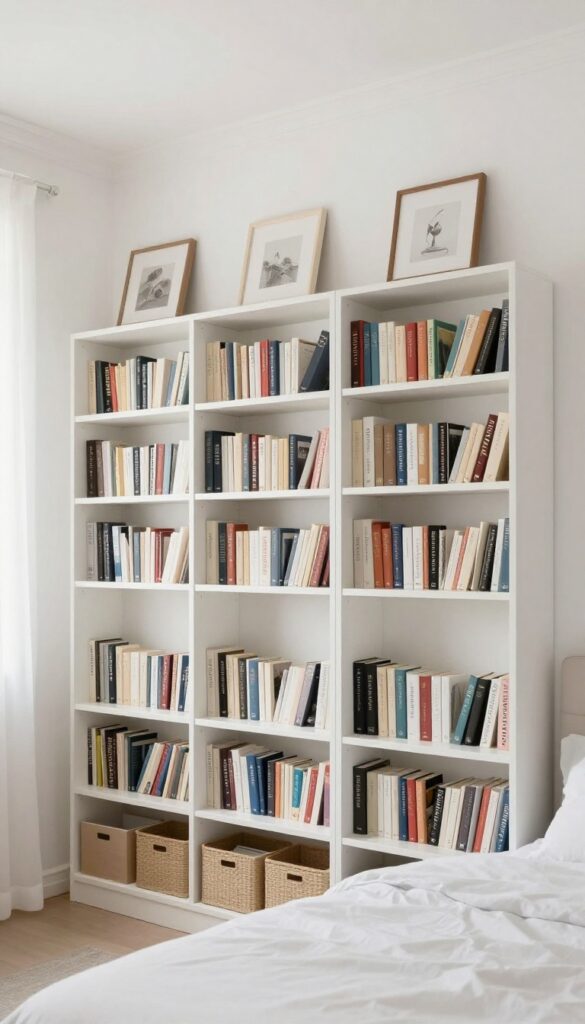
When your floor plan is stingy, you have to look up. Way up. The most underutilized real estate in any small bedroom isn’t the corner behind the door—it’s the vertical space from your headboard to the ceiling.
Most people hang their art at eye level and call it a day. But in a compact room, every inch counts. Think of your walls as a tall, narrow storage system. By drawing the eye upward, you create an illusion of height and volume.
How to execute this:
- Tall, slender bookshelves that reach within a foot of the ceiling. They take up minimal floor space but offer maximum storage. Use the top shelves for off-season clothing or pretty baskets hiding clutter.
- Floor-to-ceiling curtains. Mount your curtain rod just a few inches below the ceiling, and let the drapes kiss the floor. This trick makes even a low-ceilinged room feel loftier. Go for light, solid colors or subtle vertical stripes to enhance the effect.
- Vertical art arrangements. Instead of one wide landscape painting, hang a series of three small frames stacked vertically. It draws the gaze upward and fills dead space without crowding the room.
- A tall headboard. A low-profile bed frame might save visual space, but a tall, upholstered headboard (or even a DIY wood slat headboard that goes up 4–5 feet) creates a dramatic vertical anchor.
Pro tip: Avoid hanging tiny, precious knick-knacks high up where they look lost. Group them into clusters or use a single large piece of art. Scale matters more than you think.
2. The Magic Trick: Light, Monochromatic Paint
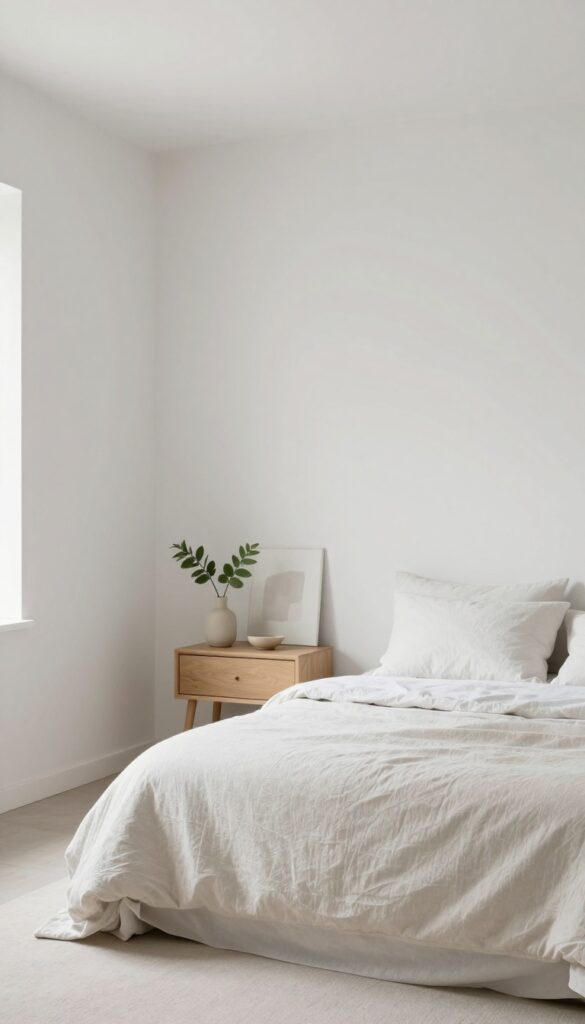
Here’s a statement that might make a maximalist cringe: small bedrooms need to be boring with color. At least at first.
The number one mistake people make is painting a tiny room a deep, dramatic navy or charcoal. Don’t get me wrong—I love a moody bedroom. But in a truly small space, dark colors absorb light and make the walls feel like they’re closing in on you. It’s the visual equivalent of wearing all black in a cramped elevator.
Instead, you want to cheat the eye. Light colors reflect natural and artificial light, pushing the visual boundaries of the room outward.
The best palette for small bedrooms:
- Soft white (not stark, hospital white—think “Swiss Coffee” or “Dover White”).
- Pale greige (a beige-gray hybrid that’s warmer than pure gray).
- Blush or very pale peach (adds warmth without weight).
- Powder blue or seafoam (cool tones recede visually).
- Lavender-gray (surprisingly relaxing and airy).
Here’s the real pro move: paint the ceiling the same color as the walls, just one shade lighter. This eliminates a harsh horizontal line where the wall meets the ceiling, creating a seamless, wrapped-in-clouds feeling.
And don’t forget the trim. White trim is classic, but painting the baseboards and crown molding the same color as the walls (a technique called “color drenching”) blurs the edges of the room, making it feel bigger. Try it. It feels weird at first, then it feels like a hug.
3. Ditch the Nightstand (Yes, Really)
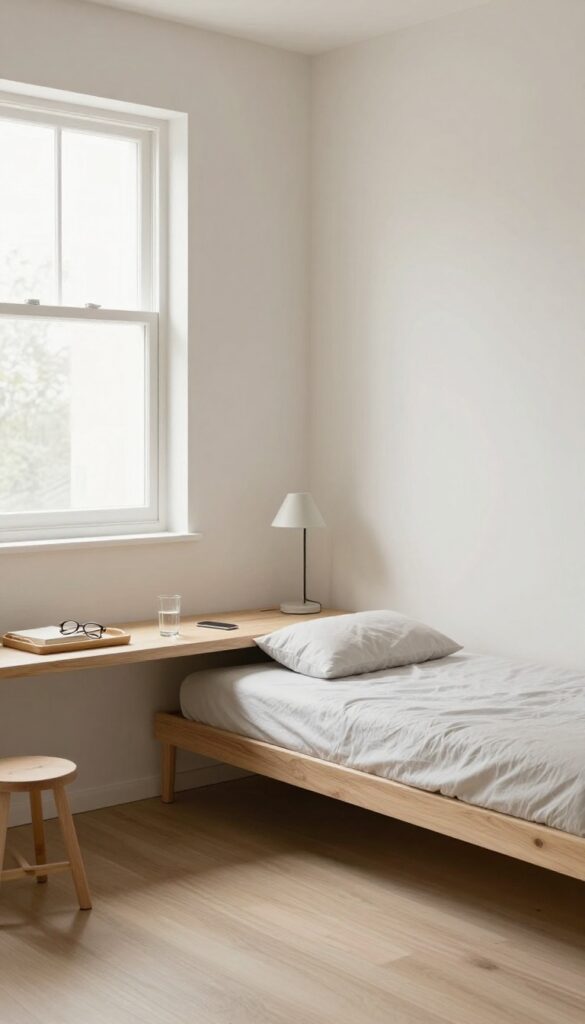
I know. This one sounds crazy. A bedroom without a nightstand? Where will you put your phone, your water glass, and the book you’ve been trying to finish for six months?
But here’s the truth: traditional nightstands are bulky, boxy, and often too deep for a small room. That 22-inch depth forces you to push your bed away from the wall, eating precious inches of walking space. And for what? A drawer full of old batteries and a half-finished bag of gummy bears?
Instead, think alternative surfaces.
Better than a nightstand:
- A floating shelf. Mount a sturdy shelf at mattress height. It holds a lamp, a phone, and a glass of water. Nothing more. The empty space underneath keeps the floor visually open.
- A tiny stool or nesting table. These take up half the visual weight. Bonus: you can tuck a nesting table under the bed frame when not in use.
- A wall-mounted sconce with a tiny ledge. Some sconces come with a small flat surface built-in. Minimalist, brilliant, and no clutter allowed.
- The windowsill. If your bed is against a wall with a window, use the sill as your nightstand. Add a small tray to corral items.
And if you absolutely must have a traditional nightstand, choose one that’s open (no doors or drawers) so it doesn’t feel like a solid block. A wire-frame or lucite side table is practically invisible.
What about the second nightstand? In a truly small bedroom, you don’t need two. Push the bed into a corner and put one small surface on the accessible side. Your partner can use a wall pocket or a headboard shelf. I promise, no one has ever broken up because of uneven nightstand distribution.
4. Use Mirrors Like a Professional Illusionist
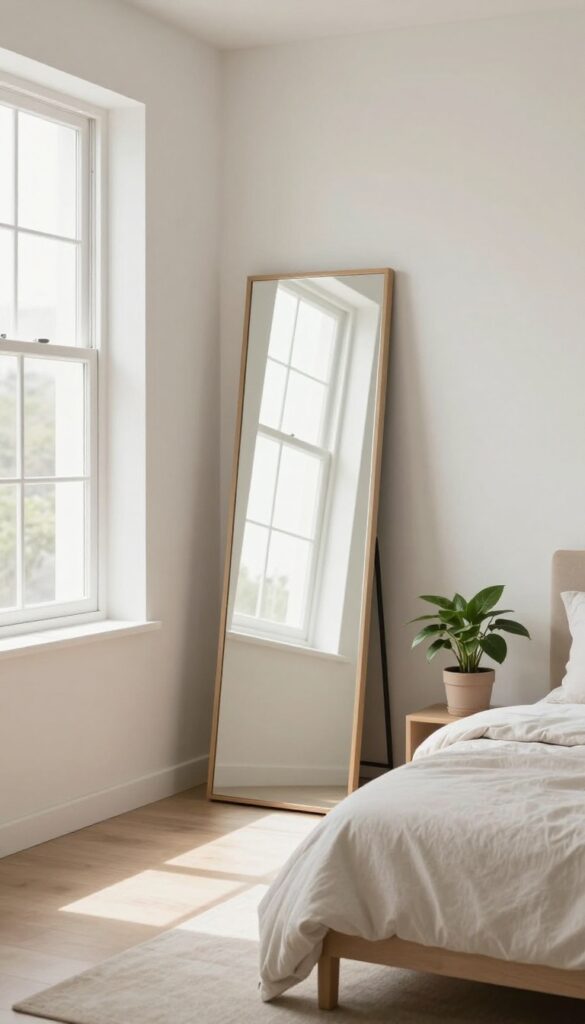
If small bedroom decor had a superhero, it would be the mirror. Not because it’s pretty (though it can be), but because it literally doubles the visual space. A well-placed mirror reflects light and views, tricking your brain into thinking the room continues beyond the wall.
But there’s a right way and a wrong way. Slapping a tiny, ornate mirror above your dresser does almost nothing. You need scale and strategy.
Mirror strategies that work:
- One large, floor-leaning mirror. Prop a full-length mirror (at least 4 feet wide) against the wall opposite a window. It will bounce natural light across the entire room and create a “window” where there isn’t one.
- A mirrored closet door. If your budget allows, replace standard closet doors with sliding mirrored panels. This is the single biggest visual expansion you can make in a small bedroom. It reflects the whole room back at you.
- A gallery wall of small mirrors. Mix round, oval, and rectangular mirrors in different frames. The varied reflections break up the wall and add sparkle without the weight of art.
- Behind the bed. Mount a large, frameless mirror horizontally behind your headboard. It reflects the opposite wall and makes the bed feel less dominating.
One warning: Avoid placing a mirror directly across from the foot of the bed if you sleep lightly. Some people find it unsettling to see their own reflection while lying down. If that’s you, angle it slightly or use a mirrored screen that can fold closed.
Also, keep mirrors clean. A smudged mirror doesn’t expand space; it just looks like a messy portal to another dimension.
5. Multifunctional Furniture Isn’t a Gimmick—It’s Survival
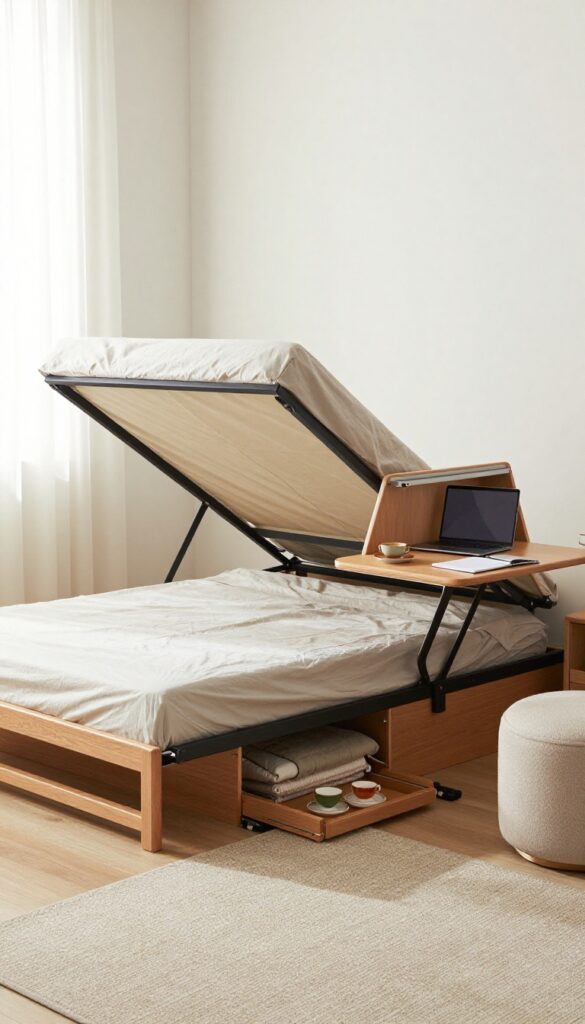
I used to roll my eyes at “transforming furniture.” It felt like an infomercial product—one step away from a mop that’s also a smoothie maker. But then I lived in a 400-square-foot studio, and suddenly a bed that turned into a couch felt like a gift from the design gods.
In a small bedroom, every piece of furniture should work at least two jobs. If it only does one, ask yourself: do I really need it?
The MVPs of multifunctional furniture:
- Storage bed frame. This is non-negotiable. A bed frame with hydraulic lift-up storage or deep drawers underneath is worth its weight in gold. You can store out-of-season clothing, extra linens, shoes, and luggage—all in space that would otherwise collect dust bunnies.
- A bench at the foot of the bed that opens. It’s a seat, a place to toss tomorrow’s sweater, and a hidden bin for blankets or boots.
- A desk that folds down from the wall. If you work from home, a wall-mounted drop-leaf desk takes up 4 inches when closed. Open it up, and you have a full workstation.
- Ottomans with trays. Use them as extra seating, a makeshift coffee table, or a footrest. Pop off the tray, and you’ve got storage inside.
The enemy: The “hopefully someday” piece. That antique trunk that’s too small to hold anything but looks cute. That extra chair no one sits in. That second dresser because you have too many clothes (more on that next). Be ruthless.
6. Reconsider the Closet (And Then Reconsider Your Clothes)
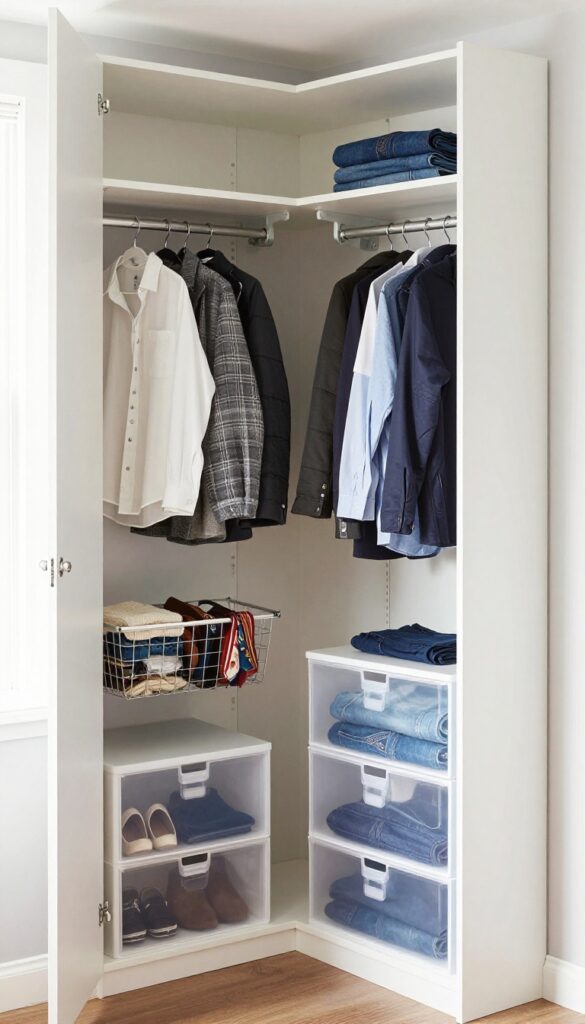
Here’s the hard truth: most small bedrooms don’t have a closet problem. They have a stuff problem. But since you’re not Marie Kondo (and neither am I), let’s work with what you’ve got.
A standard reach-in closet is often a disaster of wasted space: one rod, one shelf, and a dark abyss below. You can double or triple its efficiency without renovating.
Closet hacks for small bedrooms:
- Double rods. Install a second rod about 40 inches above the floor. Hang shirts and folded pants on the bottom, and shorter items (jackets, blouses) on top. You’ll instantly double your hanging space.
- Over-the-door organizers. Not just for shoes. Use clear-pocket organizers for accessories, belts, scarves, and even small bags.
- Pull-out baskets. Remove the closet’s fixed lower shelf and install a set of narrow wire baskets on rails. They’re perfect for sweaters and jeans.
- Use the closet floor. Don’t leave it empty. Add a low, three-drawer plastic unit or stackable shoe cubbies.
But here’s the bigger idea: If your closet is overflowing, consider moving some clothing out of the bedroom entirely. A coat rack by the front door holds daily jackets. A small armoire in the living room corner can store off-season items. And a rolling under-bed bin? That’s where the sweaters live from April to October.
A small bedroom looks chaotic when every surface has a pile of “in-between” clothes. The more you can hide behind closed doors—even doors outside the bedroom—the calmer and larger your space will feel.
7. Let the Bed Breathe (And Lose the Canopy)
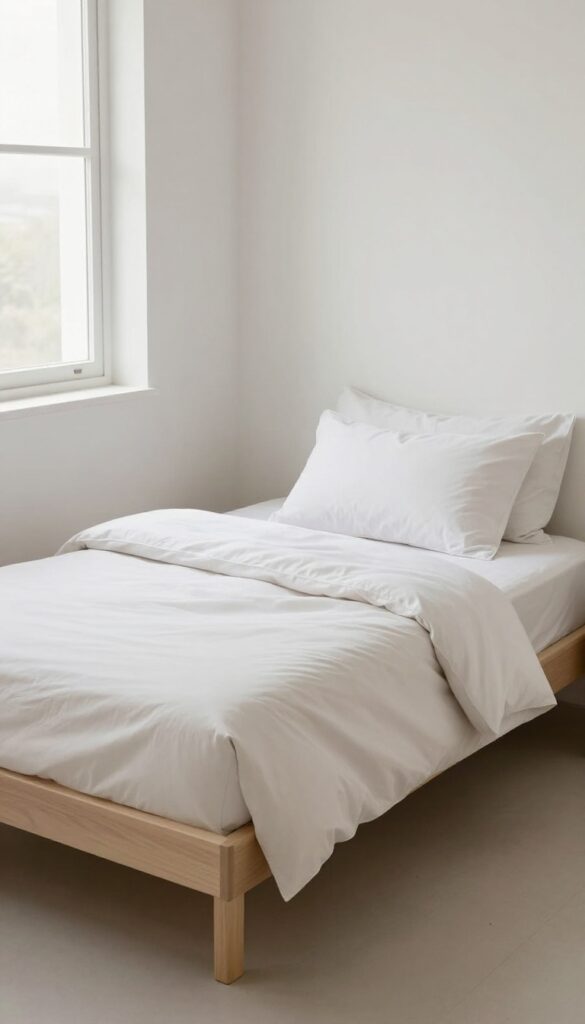
This final idea is the most controversial, but it’s also the most impactful. In a small bedroom, the bed is the elephant in the room. It takes up 70–80% of the floor space. So the way you dress and position that bed determines everything.
The biggest mistake? Over-stuffing the bed with visual weight. A massive upholstered canopy bed with a thick footboard, layered with a puffy duvet, four shams, and a quilt folded at the foot—that’s a visual blockade. It looks like a fortified castle, not a place to sleep.
Instead, aim for a low, lean, and light bed:
- Choose a low-profile bed frame. A platform bed that sits 6–8 inches off the floor (instead of 12–14) lowers the center of gravity and makes the ceiling feel higher. Plus, it’s easier to make the bed.
- Ditch the footboard. Footboards are space thieves. They break the line of sight from the door to the window and make a room feel chopped in half. A bed with only a headboard (or no headboard) feels much more open.
- Use a single duvet or quilt. Instead of a top sheet, blanket, and comforter, use one lightweight duvet in a solid or small-scale pattern. Fold it back at the corner to show the fitted sheet. Less bulk = more space.
- Limit pillows to two sleeping pillows plus one lumbar. All those decorative pillows end up on the floor anyway. Keep it simple.
Positioning matters too. If possible, float the bed so the headboard is against the longest wall, not under a window or crammed into an alcove. This creates two equal “paths” on either side of the bed, making the room feel wider. If that’s not possible, push the bed into a corner and embrace the cozy, cave-like feel. Both work—just don’t leave awkward six-inch gaps where dust collects and nothing else.
Bonus: The One Mistake That Undoes All Seven Ideas
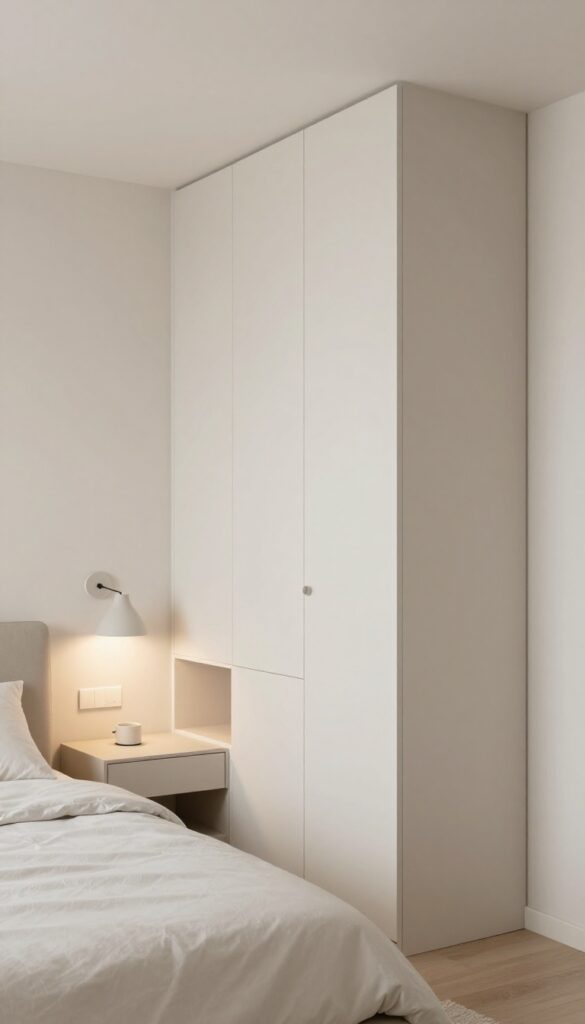
Lighting.
You can do every single thing on this list—vertical storage, monochromatic paint, floating nightstands, mirrors, multifunctional furniture, a minimalist closet, and a lean bed—and your small bedroom will still feel cramped if the lighting is wrong.
Small bedrooms need three layers of light:
- Ambient (overhead). A flush-mount or semi-flush ceiling light. No dangling chandeliers that hang at forehead height.
- Task (reading). Wall-mounted sconces or clip-on reading lights on the headboard. Free up surface space.
- Accent (mood). A tiny LED strip under the bed, a dimmable table lamp on a dresser, or a candle on the windowsill.
The cardinal sin: a single, harsh overhead light with no dimmer. That turns your cozy sanctuary into an interrogation room. Use warm bulbs (2700K) and put everything on dimmers or smart plugs.
Final Thoughts: Small Isn’t a Compromise
After living in and designing multiple small bedrooms, I’ve come to love them. They force you to make choices. You can’t just buy a “bedroom set” from a catalog and call it done. You have to think about every inch, every surface, every shadow.
And when you get it right? A small bedroom feels like a nest. It’s intimate without being claustrophobic. It’s efficient without being cold. You walk in at the end of a long day, and the room exhales with you.
So start with one idea from this list. Maybe it’s painting the ceiling the same color as the walls. Maybe it’s ordering a floating shelf to replace your bulky nightstand. Maybe it’s finally installing that second closet rod.
Don’t try all seven at once. Pick one this weekend. See how it feels. Then another. Before you know it, you’ll wonder how you ever felt cramped in a room that now feels like it’s giving you a hug every time you walk in.
Now go make your small bedroom the best room in the house. You’ve got this.